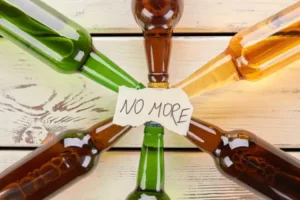
Sober living
Alcohol and Young Adults Ages 18 to 25 National Institute on Alcohol Abuse and Alcoholism NIAAA

While many teens will try alcohol at some point out of curiosity or as an act of rebellion or defiance, there is rarely just a single reason why some decide to drink. The more you understand about potential reasons for underage alcohol use, the easier it can be to talk to your child about the dangers and identify any red flags in their behavior. Instead, MacKillop suggests adolescents could be provided with better education about alcohol’s risks, and the ways that it can affect the maturing brain. “Just assuming that people will naturally develop responsible habits when it comes to these drugs is a fairly optimistic assumption,” he says. Given the scientific evidence, should governments set the legal minimum age to 25 or over – once the brain has stopped developing? Experts point out that it’s not that simple, since the public health benefits need to be balanced against people’s perceptions of personal liberty.
Alcohol and the Adolescent Brain: What We’ve Learned and Where the Data Are Taking Us
According to the National Institute on Alcohol Abuse and Alcoholism (NIAAA), about 3.4% of US teenagers ages 12 to 17 have AUD. Know where and how to get treatment and other support services and resources, including counseling or therapy (in person or through telehealth services). The early warning signs of an alcohol problem can be hard to recognize because some symptoms can overlap with what are considered normal teen behaviors. If you need suicide- or mental health-related crisis support, or are worried about someone else, please call or text the 988 Suicide and Crisis Lifeline or chat with Lifeline to connect with a trained crisis counselor. Alcohol overdose occurs when there is so much alcohol in the bloodstream that the areas of the brain controlling basic life-support systems—such as breathing, heart rate, and temperature control—begin to shut down. Parents and teachers can play a meaningful role in shaping youth’s attitudes toward drinking.
The Home Environment: What it is Like Living with Alcoholic Parents
Symptoms can include learning and memory challenges, and difficulties with balance. It’s important to remember that binge drinking can mean that the young person might teenage alcoholism make decisions, they might not make usually. Having a safety plan in place can help reduce the risk of engaging in risky behaviours like swimming or drink driving.
Health secretary ‘committed’ to new hospital
- Fermentation is a process that uses yeast or bacteria to change the sugars in the food into alcohol.
- The measure for partners’ friends’ unstructured socializing differs conceptually from participants’ unstructured socializing with friends and romantic partners.
- Launched in 2012, this five-site consortium recruited a community cohort of 831 diverse adolescents ages 12 to 21 from five U.S. regions (Durham, North Carolina; Palo Alto, California; Pittsburgh, Pennsylvania; Portland, Oregon; and San Diego, California).
- Alcohol advertising also focuses on positive experiences with alcohol, selling their brands as desirable lifestyle choices.
- A prospective four-year study measured within-subject changes in brain volume for males and females.
According to the World Health Organization, data indicates that half of all alcohol-attributable cancers in the European region are caused by light and moderate alcohol consumption. Both countries see an increase in binge drinking after someone has passed the minimum age. “But this jump was 25% higher in Austria at 16 than in USA at 21,” Ahammer says.
- One major sign of underage drinking that you as a parent can look for is a sudden change in peer group.
- That’s an awful lot of youth who could be changing their brains — and their lives — forever.
- Several studies have reported that the associations between alcohol and brain structure and function differ by sex, especially in adolescents engaging in binge drinking.
- Better neuroimaging standards, such as scanning under neutral conditions to control for factors like time since last alcohol use, and more consistency in measures used to assess cognitive functioning are also suggested as an area of future research.
Free Healthbeat Signup
- Three studies examining adolescents who used alcohol and cannabis showed these youth had consistently poorer white matter integrity across 7 to 20 clusters compared to controls, as well as poorer cognitive functioning over an 18-month (71) to three-year period (72, 73).
- For unstructured socializing with friends, we averaged responses across each nominated friend to create a measure of how frequently participants engaged in unstructured socializing with all of their friends.
- Don’t get in a car with someone who’s been drinking, even if that person is your ride home.
- Harmful chemicals from plastic bottles, such as bisphenol A (BPA) and phthalates, can leach into the water, the researchers said, especially when bottles are exposed to sunlight or high temperatures for extended periods.
In Model 2, which tested the associations between peers’ alcohol-related attitudes and adolescents’ frequency of drunkenness, both boys and girls were drunk more frequently at waves when their friends, romantic partners, and partners’ friends held more positive alcohol-related attitudes. Of note, all of the human longitudinal studies in this review relied on youth self-report of substance use. Some of the existing studies also used ranges for self-report questionnaires, which weakens the ability to understand dose-dependent relationships. These nuanced tools will help improve the accuracy and reliability of reports to better quantify the frequency and amount of alcohol consumed. Better neuroimaging standards, such as scanning under neutral conditions to control for factors like time since last alcohol use, and more consistency in measures used to assess cognitive functioning are also suggested as an area of future research.

A widespread reliance on bottled water is posing significant threats to both human health and the environment, with an estimated 1 million bottles bought every minute worldwide. The platform offers reliable resources, accessible services, and nurturing communities. Its mission involves educating, supporting, and empowering people in their pursuit of well-being. Talk to other parents If you’re going to allow any alcohol at the party, letting them know your plan can help them decide if they’re comfortable for their child to attend.
- To our knowledge, it is unknown whether unstructured socializing involving romantic partners’ friends predicts adolescents’ alcohol use.
- Although rates of drinking and binge drinking have been going down over recent decades, national surveys show that among youth and young adults, one in five report drinking alcohol in the past 30 days, and one in 10 report binge drinking.
- This strategy may be particularly useful for individuals whose partners have stronger anti-alcohol attitudes than clients/participants do themselves.
- “Our message is delay as long as you can,” says Squeglia, “because your brain is still developing, and let your brain develop and be as healthy as it can before you start engaging in things like alcohol and other substance use.”

While your rules won’t be the same or as rigid as when they were younger, having loose boundaries can be confusing and overwhelming for a teen. While you can expect a teen to test any boundaries, be clear on what is and isn’t acceptable behavior and what the consequences are for breaking your rules. At each wave, participants reported what grades they usually get in school, on a scale of 1 [Mostly A’s (90–100)] to 5 [Mostly lower than D’s (below 60–69)].